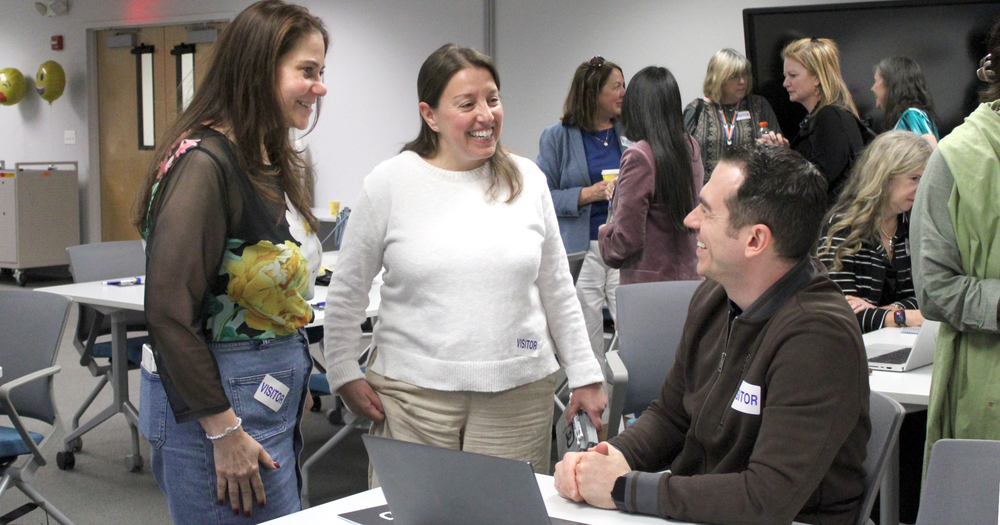
The Lower Hudson Regional Information Center’s roundtable with Renaissance, a global leader in pre-K–12 education technology, on Wednesday, June 3, was more than a check-in. The program offered educational leaders in the region an advance look at Renaissance Intelligence, the organization’s new product launching July 1, 2026.
Its promise: coherence.
“Instructional coherence doesn’t happen by accident,” said LHRIC’s Instructional Technology Manager Mary Lynn Collins-Callanan in her introduction to the day. “Renaissance Intelligence is a new approach that promises seamless learning experiences across core subject areas and empowers educators to respond to each student’s learning journey in real time.”
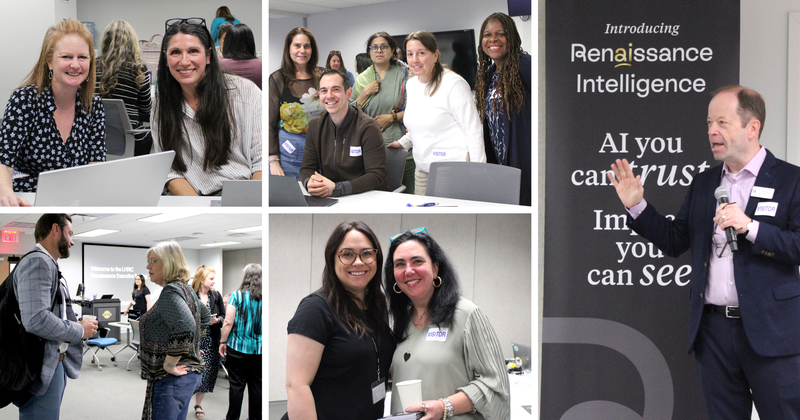
“Teachers are guided by multiple compasses that all point in a slightly different direction,” said Dr. Gene Kerns, Renaissance’s Chief Academic Advisor and researcher, who led the opening session. He cited a 2026 report by the Council of Chief State School Officers, which highlighted the positive impact of students experiencing connected, purposeful learning across core classes, intervention blocks and tutoring. “Renaissance Intelligence shows teachers the clearest path they can take.”
A strength of the cohesive new platform is its relationships with major curriculum companies. Educators select the general education curriculum they are using; Renaissance Intelligence uses AI to personalize student learning, dynamically group students by skill gaps, and generate classroom-ready lessons that are aligned across subject areas.
Dr. Kearns said that by Fall 2026, Renaissance Intelligence will collectively cover 50% of the K-8 ELA curriculum market and 80% of math curricula. They’ve already aligned with partners including MyView Literacy, McGraw Hill Emerge, enVision Mathematics and EngageNY Math.
Assistant Director of Educational Technology for Putnam | Northern Westchester BOCES Jennifer Harriton Wilson said she saw the need for curriculum integration. “There’s not always the flexibility for teachers to work cohesively,” she said.
Many of the educators at the information session were drawn to attend because they already use Renaissance’s Star tests for reading, math, early literacy, and custom assessment.
Jamie Haug, Director of Technology at the Pearl River School District, said that she was excited to see what’s on the horizon and find new ways to apply digital assessments for student success.
Scott Staub, Director of Instructional Technology at the Lakeland Central School District, was enthusiastic about the potential for Renaissance Intelligence to paint a picture of each student and identify data-driven support at the individual level. “It will help me help students to achieve and succeed,” he said.
“Renaissance is our one-stop visualization of student performance,” said Dr. Robert Roelle, Mount Pleasant School District’s Director of Technology & Data. “This new tool will take us to another level of helping to support students in doing better.”
For information about Renaissance products and to learn how assessment, practice and instruction can assist your students reach their learning goals contact Caroline Calabrese, Coordinator of Instructional Technology.